

In today’s tech-savvy world, a strong home network isn’t just a luxury; it’s a necessity. Imagine trying to stream your favorite show while your Wi-Fi signal plays hide-and-seek—frustrating, right? Home networking services are here to save the day, ensuring seamless connectivity for all your devices, whether you’re gaming, working from home, or just scrolling through cat memes.
But let’s face it: setting up a network can feel like deciphering an ancient language. That’s where professional home networking services come in, turning your chaos into a well-oiled machine. With expert help, you’ll enjoy reliable connections and speed that even your grandma would approve of. So, why settle for buffering when you can have a network that’s as smooth as your favorite streaming service?
Overview of Home Networking Services
Home networking services provide crucial support for establishing and maintaining a reliable internet connection in residential settings. Professionals in this field handle various tasks, including installation, configuration, and troubleshooting of network devices.
Services often include wireless network optimization, ensuring strong connectivity throughout the home. Experts assess the layout and intervene where signal strength weakens, improving overall performance.
Additionally, home networking services typically cover cybersecurity measures. Strong security protocols safeguard devices against unauthorized access, enhancing user safety. With the rise of smart home technology, these services adapt to integrate various IoT devices seamlessly.
Installation of network equipment forms another key service. Technicians select appropriate routers, switches, and extenders based on user requirements. Personalized setups optimize bandwidth usage and accommodate multiple devices simultaneously.
Moreover, ongoing support and maintenance form part of the package. Users benefit from regular firmware updates, which improve device performance and security. Technicians also provide remote or on-site assistance for troubleshooting issues, ensuring uninterrupted service.
Networking services frequently extend to performance monitoring. Experts analyze network usage over time, identifying trends and potential optimization strategies. This proactive approach delivers a more efficient network experience, minimizing lag during critical activities like streaming or online gaming.
Ultimately, home networking services represent a comprehensive solution for those aiming to enhance their digital experience. They cater to diverse needs, ensuring a reliable, secure, and efficient home network.
Types of Home Networking Services
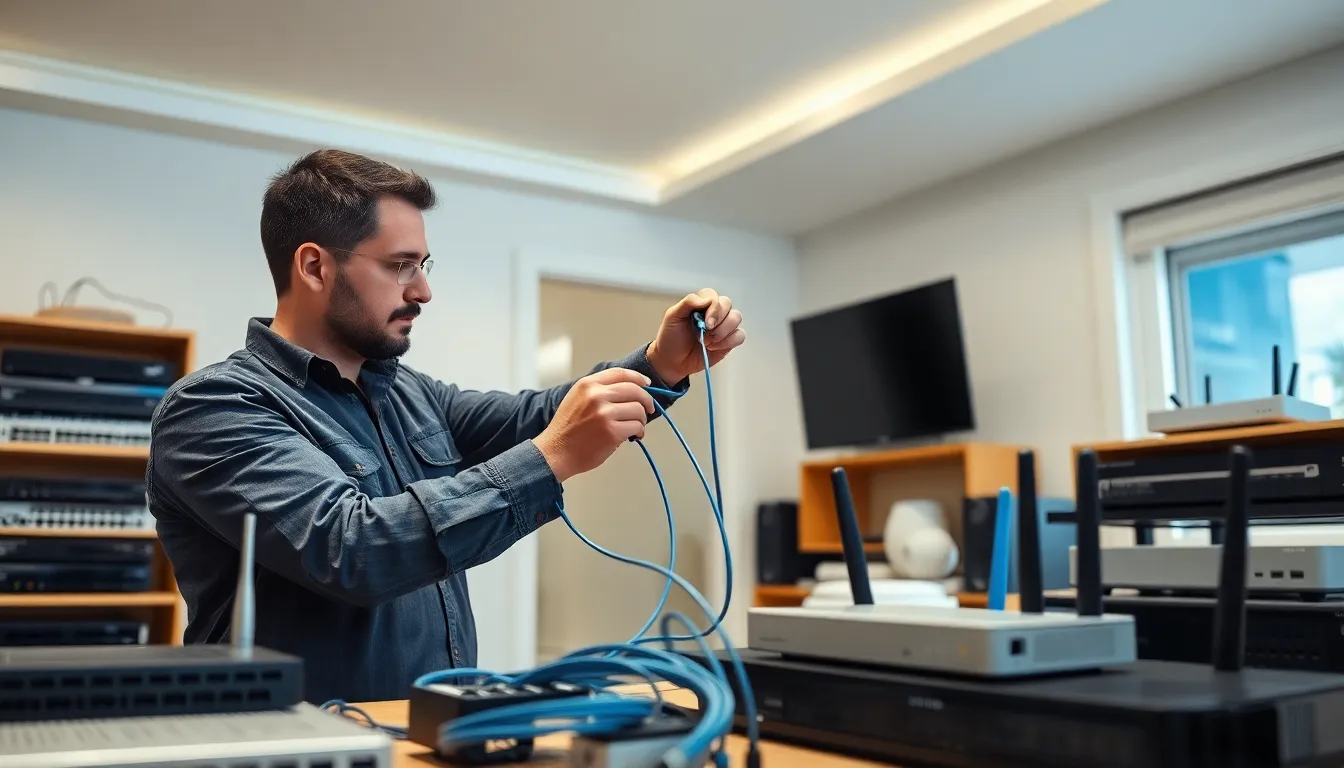
Home networking services encompass various solutions designed to meet specific connectivity needs. These include wired and wireless options that enhance the user experience across multiple devices.
Wired Networking Solutions
Wired networking solutions provide a stable and reliable internet connection. Ethernet cables connect devices directly to the router, minimizing interference and latency. Technicians can set up a structured cabling system to ensure optimal data transmission. Installation may involve creating dedicated home networks that enhance performance for activities like gaming or streaming. This approach supports high bandwidth and allows multiple devices to connect without compromising speed. Security also benefits, as wired connections are less vulnerable to unauthorized access. Overall, wired solutions offer essential support for home networking by providing consistent speed and reliability.
Wireless Networking Solutions
Wireless networking solutions offer flexibility and convenience for home users. Utilizing Wi-Fi technology, these systems enable multiple devices to connect without physical cables. Technicians often assess the layout of the home to determine ideal router placement for maximum coverage. Mesh networks can also be implemented to eliminate dead zones, ensuring a strong signal throughout the property. With the rise of smart home devices, wireless networks adapt easily to support the Internet of Things (IoT). Additionally, robust security measures, such as WPA3 encryption, protect against unauthorized access. Wireless networking solutions effectively meet the demands of modern households seeking efficiency and ease of use.
Benefits of Home Networking Services
Home networking services offer numerous advantages that enhance the overall internet experience in residential settings.
Enhanced Connectivity
Reliable connectivity leads to smoother online activities. Professionals optimize network configurations to ensure devices stay connected without interruptions. High-speed internet becomes accessible throughout the home, regardless of the number of connected devices. Technicians also implement solutions like mesh networks to eliminate dead zones, allowing users to stream, game, and video chat seamlessly. Reduced latency and increased bandwidth efficiency improve responsiveness, catering to modern household demands. Residents can enjoy the convenience of connecting smart home devices, ensuring everything works together efficiently.
Improved Security
Security becomes a top priority with professional home networking services. Cybersecurity measures proactively protect devices from unauthorized access and malware attacks. They implement firewalls and secure configurations to safeguard sensitive information. Regular software updates enhance defenses against potential threats. Technicians configure secure connections and provide guidance on best practices for network usage. Users gain peace of mind knowing their data remains protected while utilizing their home network. With these services, families can confidently explore the connected world without compromising their safety.
Choosing the Right Home Networking Service
Selecting the right home networking service requires assessing individual needs. Various factors determine the best option.
Factors to Consider
First, evaluate the internet speed requirements based on household activities. For streaming HD content or online gaming, higher speeds are crucial. Next, consider the number of devices connected to the network. Households with numerous devices may require advanced routers and configurations. Also, examine the home layout. Certain designs may necessitate mesh networks for optimal coverage. Finally, prioritize security features. Firewalls and secure settings protect devices from potential threats.
Popular Service Providers
Many service providers specialize in home networking solutions. Comcast Xfinity offers comprehensive packages that include Wi-Fi optimization. AT&T provides fiber internet options, known for speed and reliability. Verizon’s Fios also delivers robust services with strong cybersecurity measures. Notably, Google Nest Wifi integrates well for smart home setups. Each provider offers various plans tailored to meet distinct connectivity requirements. Choosing the right one involves comparing packages based on speed, features, and pricing.
Future Trends in Home Networking Services
Emerging technologies are shaping the future of home networking services significantly. Increased adoption of smart home devices creates a demand for robust and seamless connectivity. Focus on Wi-Fi 6 and future Wi-Fi 7 standards enhances internet speed, capacity, and efficiency, allowing more devices to connect without interference.
Growth in mesh networking solutions addresses the need for extended coverage. Homeowners often experience dead zones where connectivity is weak. Integrated systems with multiple access points reduce these issues, ensuring strong signals throughout larger spaces.
Integration of artificial intelligence into networking services optimizes performance. Smart algorithms adapt to user behavior, automatically prioritizing bandwidth to devices in use. This leads to enhanced experiences during activities like video streaming or online gaming.
Security remains a top priority for home networking services. Advanced cybersecurity measures guard against emerging threats. Firewalls and continuous monitoring systems ensure protection against unauthorized access and malware attacks, giving users peace of mind.
Professional support continues to evolve alongside technology. Regular firmware updates enhance device capabilities and patched security vulnerabilities. Technicians skillfully analyze network performance, providing tailored recommendations for improvements.
Flexibility in service offerings is crucial. Customized packages cater to varying internet speed needs, accommodating different household activities. Major providers like Comcast Xfinity and Verizon’s Fios present options designed for specific requirements, enabling informed choices based on speed and pricing.
Networking services adapt to trends in remote work and online education. Reliable connections enable effective collaboration and learning experiences. Future innovations focus on enhancing user experience and simplifying installations, making home networking services indispensable in the digital age.
Investing in home networking services is essential for anyone looking to enhance their digital experience. With the growing reliance on internet connectivity for work and leisure, a strong and reliable network is no longer a luxury but a necessity. Professional assistance ensures that users can navigate the complexities of modern technology with ease, from optimizing speed to implementing robust security measures.
As households continue to expand their use of smart devices, the importance of tailored networking solutions will only increase. By choosing the right service provider and leveraging expert knowledge, individuals can enjoy uninterrupted connectivity and peace of mind. Embracing these services paves the way for a smoother, more efficient online experience in today’s connected world.